Перейти к основному содержанию

Тематический план

  • 1. Introduction to Exoplanet Discovery through Albedo

    Title of Lesson: Exoplanet Discovery  through Albedo - 

    Middle School  /High School                                  January 2025

    Grade (Age) Level: Grades 5-8 (Ages 10-13), Grades 9 -12 (Ages 14-18)

    Written by: Frances Dellutr, Xavier Gonzalez, and Lynne Zielinski. 

    This image is a simulation of the star Trappit and planets orbiting.
                                    Artist Concept-   Trappist 1 exoplanet system.      (NASA.gov)       

                                                    Standards:                     

    NGSS (Next Genration Science Standards, US)   http://www.nextgenscience.org/search-standards 


    PS2-1

    Motion and Stability: Forces and Interactions

    Plan and conduct an investigation to provide evidence of the effects of balanced and unbalanced forces on the motion of an object.


    PS2-3

    Motion and Stability: Forces and Interactions

    Make observations and/or measurements of an object’s motion to provide evidence that a pattern can be used to predict future motion.

    PS1-4

    Structure and Properties of Matter

    Develop a model that predicts and describes changes in particle motion, temperature, and state of a pure substance when temperature is removed.


    PS2-3,5

    Forces and Interactions

    Ask questions about date to determine the factors that affect the strength of electric and magnetic forces.

    PS-4

    Waves and Electromagnetic Radiation

    Develop and use a model to show that waves are reflected, transmitted, or absorbed through various materials

    MS-ESS1-3

    Space Systems

    Analyze and interpret data to determine scale properties of objects in the solar system

    PS3-1

    Motion and Stability: Forces and Interactions

    Apply scientific and engineering ideas to design, evaluate, and refine a device that minimizes the force on a macroscopic object during a collision.

    PS2-1

    Motion and Stability: Forces and Interactions

    Analyze data to support the claim that Newton’s second law of motion describes the mathematical relationship among the net force on a macroscopic object, its mass, and its acceleration.

    CCSS

    Operations and Algebraic Thinking


    CCSS:   (Common Core State Standards US): https://corestandards.org/   - US

    Topic: Art, Astronomy, albedo, orbital debris, debris detection


    Summary: 

    As of  Dec. 12, 2025  research suggests that  our universe hosts 4,341 confirmed exoplanets, 15,017 uncomfirmed planets

    in 4,320 systems, 969 harboring multiple planets. NASA. Albedo, the radiant reflection of sunlight, guides our celestial quest. Join this riveting session to unravel energy transfer mysteries, discover exoplanets through a 'spinner' experiment, and decode albedo's cosmic secrets!

    This lesson takes a look at the detection of exoplanets, those orbiting stars outside our solar system using albedo. As planets or objects orbit a star, the brigtness of that star is diminised.  This measurement gives us information about the orbiter. Taking a look at space object sizes, characteristics, and distance from Earth can be greatly defined by using albedo.

    The Objectives of the Project        This imge is a target with an arrow piercing the bull's eye.

    1. Educators/sutdents will be able to understand the transfer of energy in absorption of light waves to determine the presence of bodies in transit around a star (energy source). 

    2. The session will further extend into the differing components of planet atmospheres and the affected albedo. 

    3. Space satellites detecting albedo will be presented.

    4. Citizen Science opportuniteis for analyzing data from space-based satellites will be presented.

    A great site from NASA
    Science Buddies Resource Guide

    Topics:
    Exoplanets, Albedo,  Light Curve, Planets, Atmosphere, Citizen Science, JWST, James Web Space Telescope, TESS, Citizen Science


  • 2. Significance of understanding Exoplanets

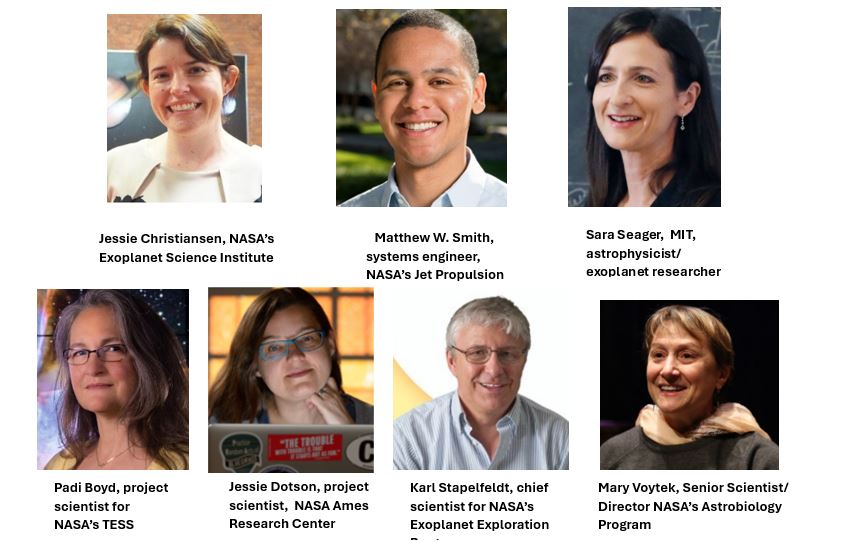
    Exoplanet reserachers and scientists, planetary scientists, system scientists, project scientists, etc. gave their thoughts on why the study of exoplanets is an important effort.

    The image is of even exoplanet researches who give their rationale for exoplanet research.

    These topics will make excellent journaling or Whole Class Discussion Topics:

    • Discovery and Curiosity: Searching for exoplanets allows for the thrill of discovering something new that no one has ever seen before, expanding our understanding of the universe.

    • Possibility of Life: The quest to find Earth-like planets and determine if life could exist outside our solar system is a major driver for exoplanet research.

    • Exploration and Excitement: The excitement of finding unique and unexpected exoplanets fuels the exploration of new worlds and planetary systems.

    • The Question of Life Beyond Earth: Exoplanets may help to answer one of life's profound questions: "Are we alone in the universe?" by looking for signs of life beyond our planet.

      This an iimaginative image of a being who could off-world
    • Understanding Planetary Formation: Studying exoplanets helps us understand how planetary systems are formed, testing theories about our own solar system’s creation.

    • Cultural Relevance: Planets resonate with people across cultures, making the search for exoplanets a meaningful way to connect humanity with the cosmos.

    • Testing Solar System Knowledge: Observing exoplanets challenges our understanding of planetary processes and allows us to test whether our knowledge of our own solar system holds true on a cosmic scale.

    The NASA Exoplanet Exploration program is to discover and characterize planetary systems and Earth-like planets around nearby stars. This session engages the 

    students in activities that connect them to the tools of exoplanet exploration, pushing them to ask: 

    a. Where did we come from? 

    b. Are we alone? 

    Delving into the science of exoplanet exploration helps us to know our solar system better, understanding new scientific discoveries in our galaxy and the challenges that lie ahead.


  • 3. Space Telescopes that investigate Exoplanets

    Deactivated but important Space Telescopes:    (all images from NASA.gov)

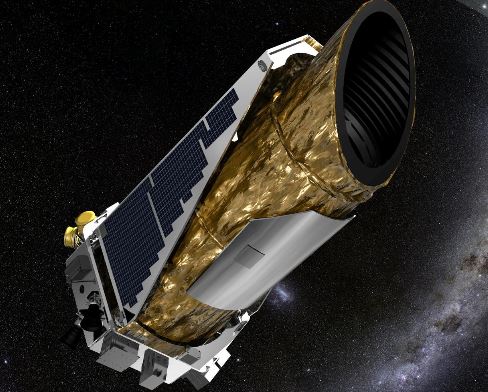
    Kepler - Launched 2009, deactivated in 2018 Artist's concept of orbiting retired Kepler Space Telescope. 

           Kepler discovered  the 1st exoplanets!

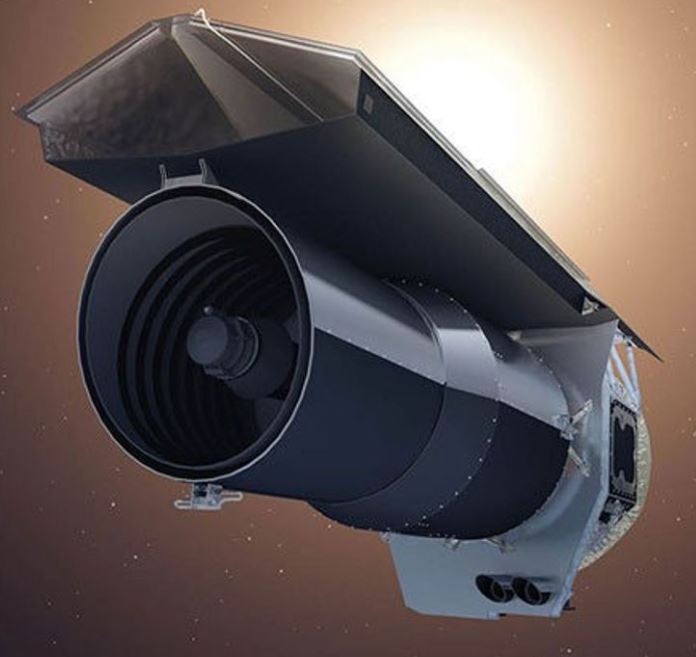
    This image is an artists concept of the retired space telescope SpitzerSpitzer - Launched 2003, deactivated 2020

            Spitzer made the first exoplanet weather map of temperature variations over the surface of a gas exoplanet.


    Data from Spitzer and Kepler have defined informaton about the Trappist 1 system.
      
    Watch Trappist 1 exoplanet system to understand the contribution Spitzer and Kepler have made so that scientiests and artists could conceptualize the system.


    Functional Space Telescope Still Collecting Data:

    A. JWST  

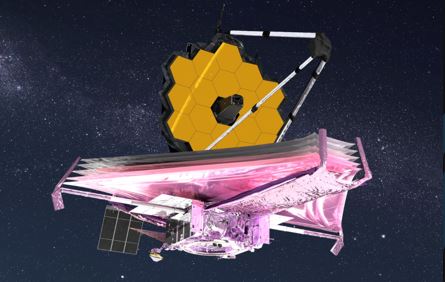
    JWST  (James Webb Space Telescope) is poised to open a revolutionary new phase in our understanding of exoplanets 

    Image of James Webb Space Telescops (JWST)with transit spectroscopy of relatively short period planets and coronagraphic imaging of ones with wide separations from their host stars.


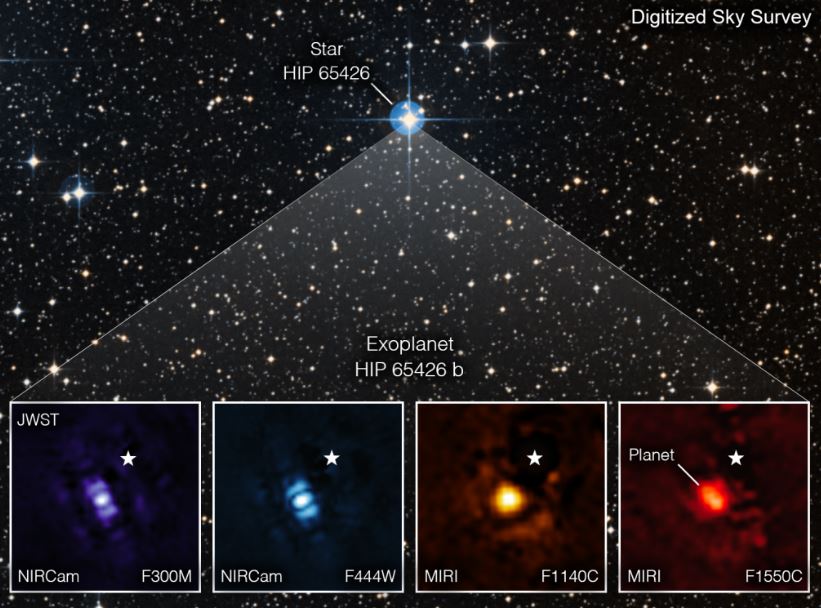
    Image of 1st image captured of an exoplanet system by JWST


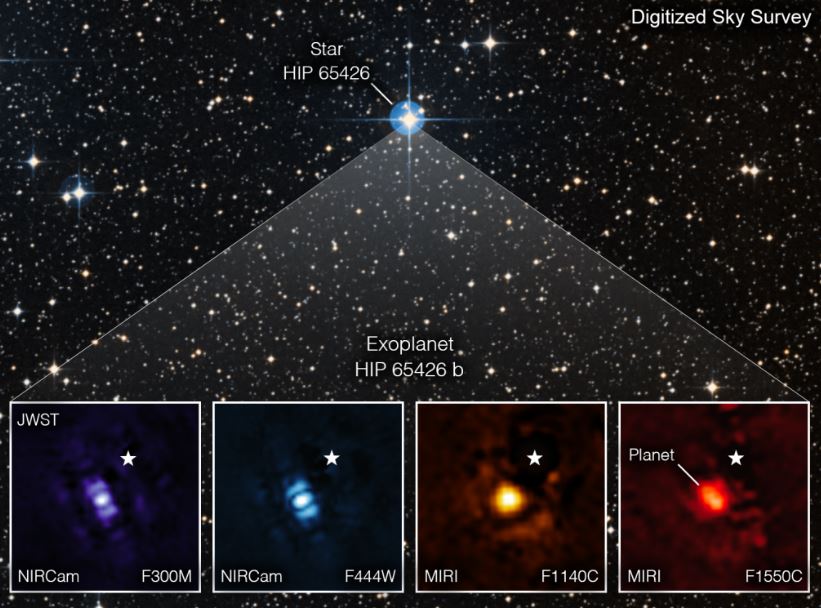
    JWST takes a look at HIP 65426b The image, seen through four different light filters, shows how JWST's powerful infrared gaze can easily capture worlds beyond our solar system This points the way to exciting future observations that will reveal more information than ever before about exoplanets.

    The image, as seen through four different light filters, shows how Webb’s powerful infrared gaze can easily capture worlds beyond our solar system, pointing the way to future observations that will reveal more information than ever before about exoplanets.

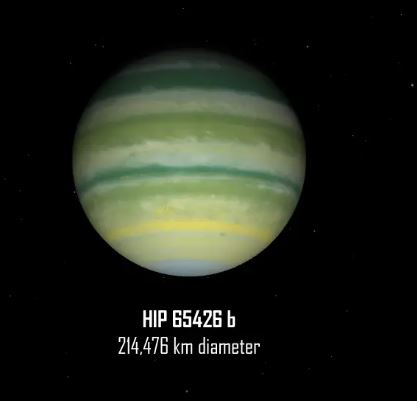
    This shows 4 images of HIP65426b from different cameras onboard JWST. HIP 65426 b is a gas giant exoplanet that orbits an A-type star. Its mass is 9 Jupiters, it takes 630.7 years to complete one orbit of its star, and is 92 AU from its star. Its discovery was announced in 2017. NASA's James Webb Space Telescope was used to directly image the planet in 2022, located in the constellation Centaurus. It is a young planet (14 m years) and does fit the current models for planetary formation – not debris disc as expected.

    Here is the final product of the four images:

    This is a suggested image of HIP 64624 b  from several cameras on JWST .


    B. TESS  Transiting Exoplanet Survey Satellite

    TESS Information  The image is of the Trasitting Exoplanets Survey Satellite

    TESS Overview

    TESS - The Primary Mission


  • 5. Types of Exoplanets

    Ground-based and space-based telescopes have greatly propelled exoplanet existence, location, and  their characteristcs.

    There are several exoplanet 'types' that are  currently  being distinguished.

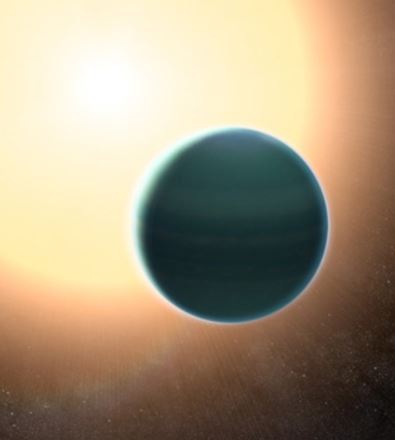
    Image is of a Neptunian world in very close orbit with a atar.Neptunian worlds, similar to Uranus or Neptune in our solar system. with high density are a current type.  They are also know as the Ice Giants.’’


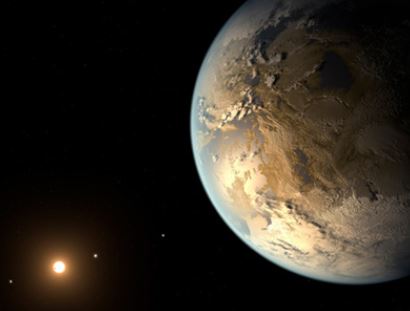
    Terrestrial Worlds  are rocky worlds, with iron-rich cores, similar to Earth Image is of a solid world, similar to Earth with its star far off in the distance.


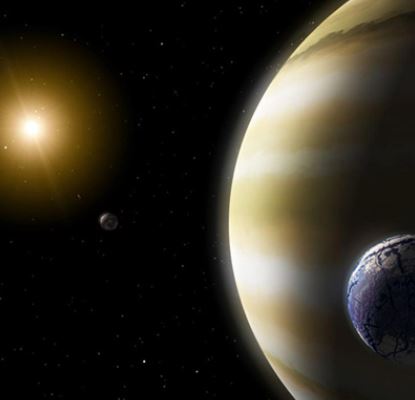
    Gas Giants: Mostly gas worlds composed of hydrogen and helium with low density.Image suggests an very large hazy exoplanet with an Earthlike planet, both orbiting a distant star.


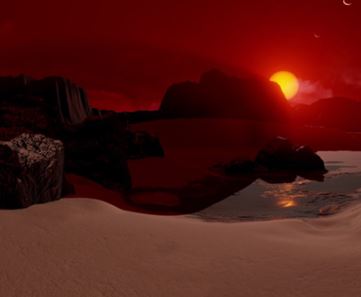
    Planets around Dwarf Stars: These  have a mere fraction of the Sun's mass and luminosity but are more than 10 times as numerous. Example: the TRAPPIST-1 system

     This is a dark image with a star far away from a terrestrial planet.  It looks very cold.


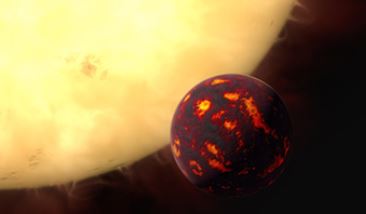
    Super Earths,: These are  a class of planets unlike any in our solar system—more massive than Earth This image is of a very large and bright star and firery star orbitting close by.

    yet lighter than gas giants like Neptune, which can be made of gas, rock or a combination of both. Example: 55 Cancri e

    Hot Jupiters: These are exoplanets that are roughly the same mass as Jupiter (or larger), but which orbit extremely close to their star. Example: 51 Pegasi b 

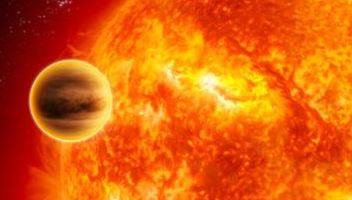
    Image is of a  planet orbitting very near a star with what appear to be plasma around it.


    • These are 10 multiple choice questions on the different types of exoplanets.

  • 6. Search Methods

    How to Find Exoplanets

    Exoplanets are to see because the star they orbit can be millions of times brighter than the planet itself.  A good example is to imagine a firefly flitting around a spotlight.

    Exoplanets, What can We really See?

    5 Methods:

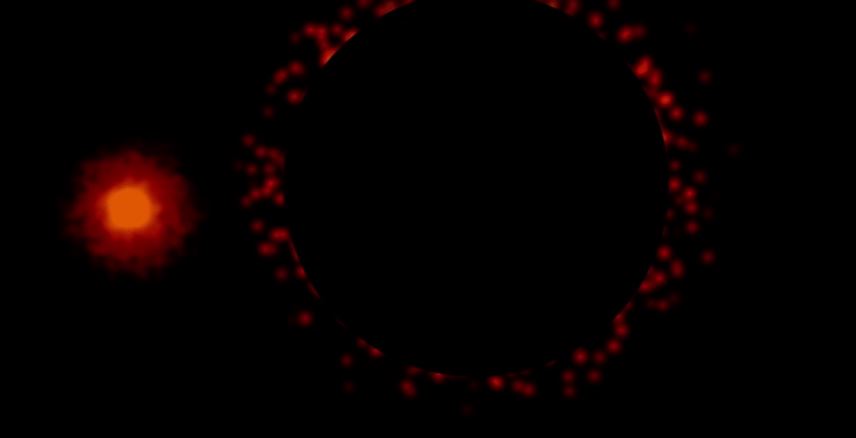
    Direct Observation:     Image is of a star whose  corona birghtness has been blocked with a disc so that an orbitting planet can be seen
    Direct Imaging - See this Actual Video from Keck Observatory!

    The direct imaging observation is very difficult with current technology because of the brightness of the host star. This difficulty has led to only 82 exoplanets being imaged through this method from the Keck Observatory in Hawaii. The JWST (James Webb Space Telescope) has been able to capture one exoplanet with direct imaging using its cameras that take advanage of different wave lengths..  There are several ways that the exoplanets have been imaged.  One technique is to use coronography in which the host star and its corona are hidden, leading to a coronograph.  Here is an example of a coronograph of a host star with four planets orbiting it. Host star coronograph and four orbiting exoplanets. 

    The star's diameter is the small 'star' image in the center of the disc that hides the star's corona. Time-lapse information was collected for twelve years on this HR 7899 star system. 

    JWST Image:  This JWST image of an exoplanet is made by using the cameras on board that respond to differnt wavelengths.Cameras onboard JWST respond to different wavelengths for imaging the exoplanet. It is anticipated that this type of direct imaging will lead to divulging many characteristics of exoplanets.

    Resource for Direct Imaging Exoplanets

    Radial Velocity:

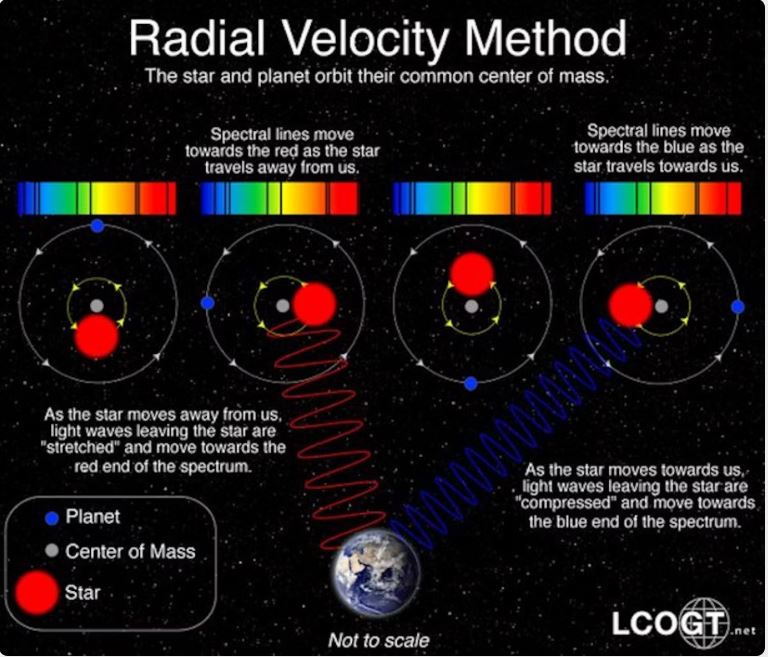
    High Accuracy Radial velocity Planet Searcher (HARPS) in Chile is used here. The key is looking at the spectrum of the star. As the star moves towards us, its light is compressed, and the spectrum shifts to red. As the star moves away, its light is stretched, and the spectra shifts to blue. The star’s spectrum is slightly affected by the planet's motion.  (Credit:  Inverse.com)

    Gravity Microlensing Effect:

    This is an artist's impression of a gravity microlensing effect with a planet.The planet’s gravity adds an additional lensing event to the star’s light, brightening the image of the background star and allowing astronomers to learn a lot about that planet, including its mass and orbital period despite the fleeting nature of the event.


    Here are two four minute video on Gravity Micrograitational lensing Effect: 

    Microlensing Effect from NASA.gov

    Tutorial with Fraser Cain: Gravitation microlensing effect  

    30 second Walt Feimer (NASA Site) Animation of lensing of star around a planet:

    lensing of star around exoplanet

    Schematic animation of gravitational microlensing;


    Astrometry:

    Astrometry locates planets by directly detecting the position of the host star perturbed ('wobbling') by the planet’s gravitational force, so it can get the planet’s mass and orbital inclination.  The paper below explains the mathematical derivation used to determine the astrometric detection of exoplanets.

    Perturbation is the deviation in the motion of a celestial object caused either by the gravitational force of a passing object or by a collision with it.
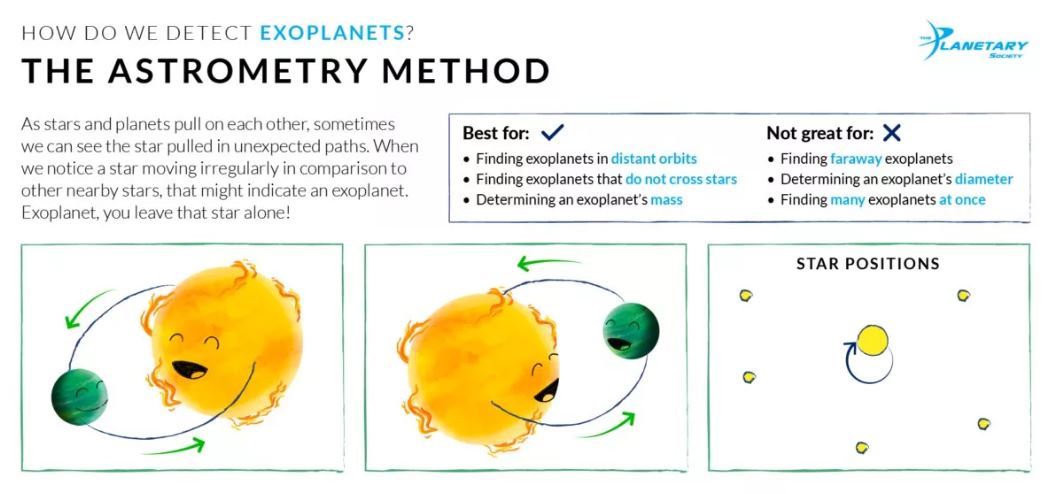
    This image is from the Planetary Society and shows a cartoon imge of a wobbling star reacting to a planet moving around it.


    The Transit Method:

    Put in transit method albedo from AIAA ppt here, then explain.

    In this simulation, an exoplanet is orbitting its star while a ligth curve is recording the light that is reflected and absorbed in reference to the time elapse of the orbit. Notice there is an increase in the curve just before the 'planet' slides behind the 'star,' then a slight dip as the 'planet' is fully behind the star.  This change demonstrates the planet adding to the stars albedo and then the cumulatve albedo affect of the planet and its star dipping when the albedo of the planet is hidden behind the star.

    Astronomy Stack Exchange


    Take a look at the 5 detection methods from Journal of Physics Article

    Inverse.com, a magazine that gives smart, in-depth coverage of the latest discoveries and research in science, from evolution to space exploration has the following article on the 5 detection methods. Methods for exoplanet detection


    https://iopscience.iop.org/article/10.1088/1742-6596/2012/1/012135/pdf


    Comparison of TRAPPIST 1  System to Solar System - March 22, 20177
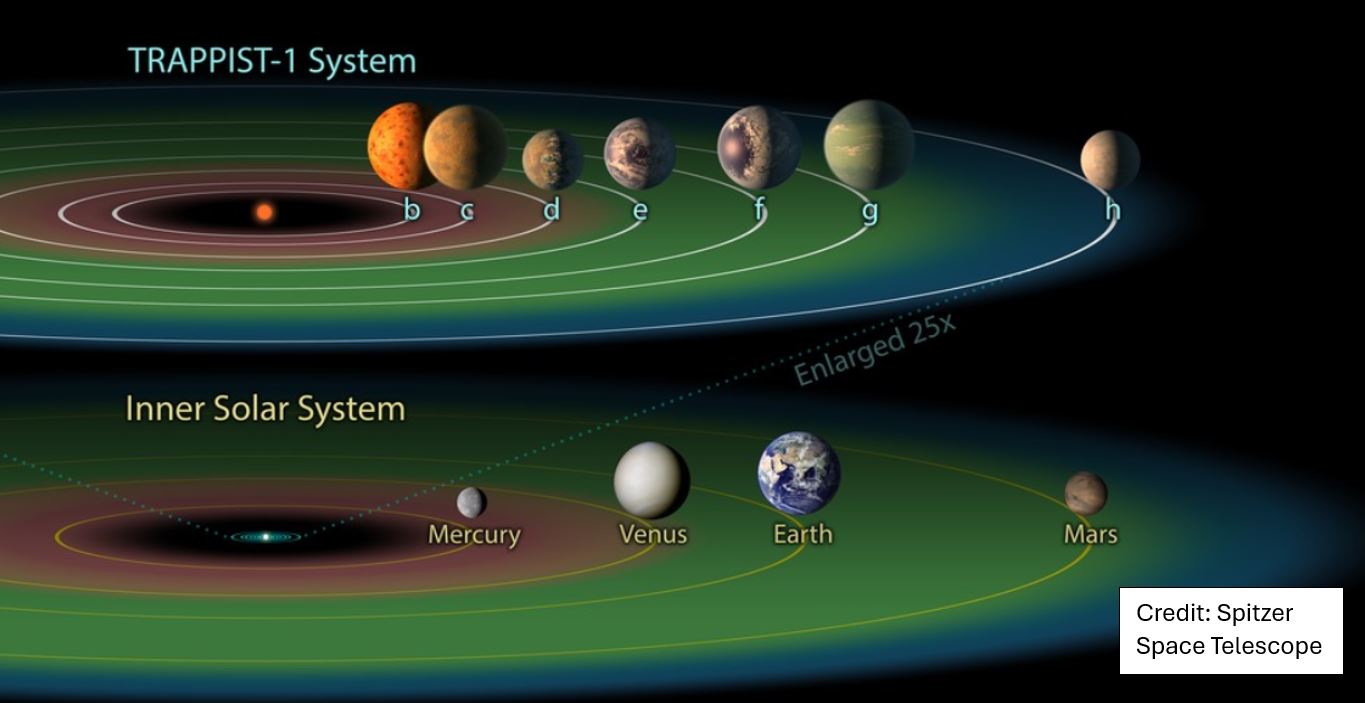
    The image shows the TRAPPIST 1 planet orbiting system and compares it to the solar system planet orbits.

     The entire TRAPPIST 2 system would fit in the orbit of Mercury around the sun!


    Statistics Data on TRAPPIST 1

    Habitable zone planets in TRAPPIST 1 System

    Video of the TRAPPIST 1 Systems:


  • 7. Albedo Detection of Exoplanets through Albedo

    Exoplanets and Albedo Experiement:

    A good reference with the SpacEdge Academy for using albedo detection can be found in the SpacEdge Academy course:

    Detecting Orbital Debris using Albedo

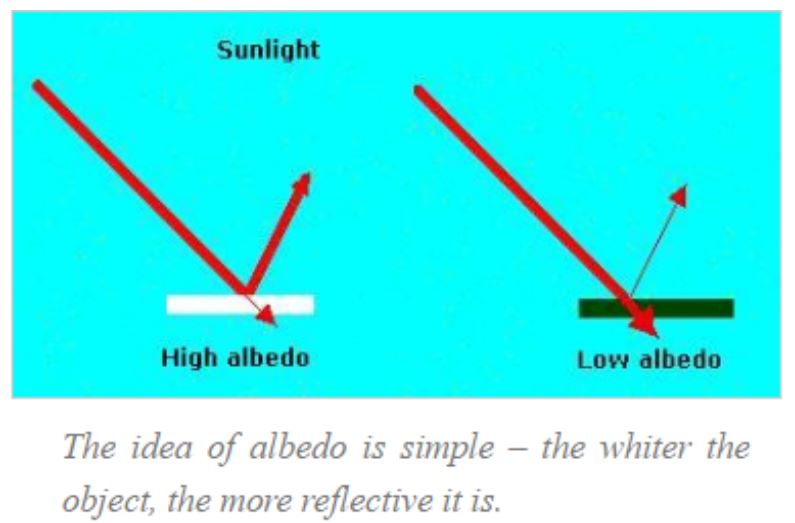
    Albedo is the amount of light that is reflected from a surface.  The imafe is a simple diagram of albedo.

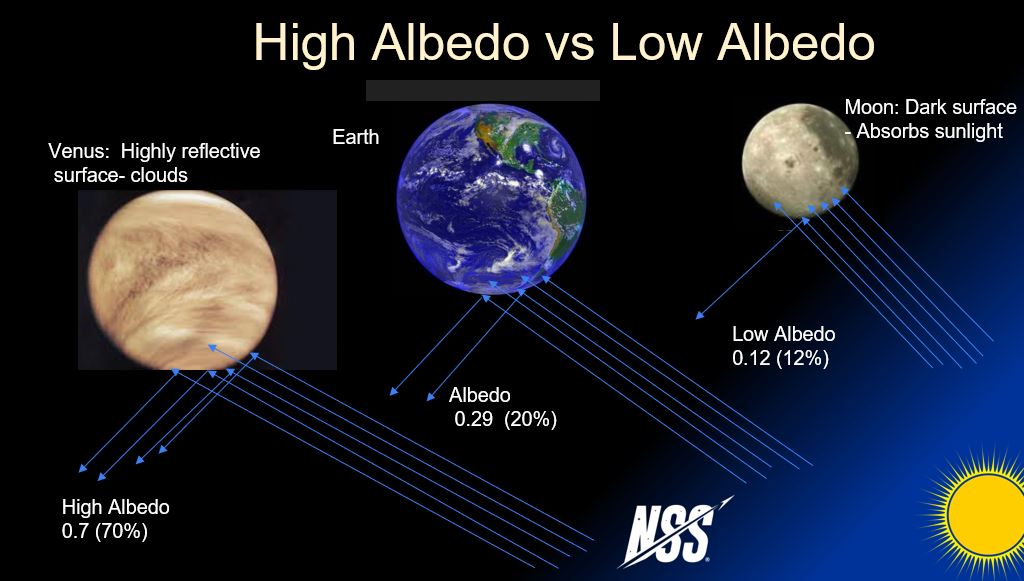
    The image below is from "A Blog About the Universe" and illustrates how light from a light source reflects from a surface. Albedo is the proportion of light that is reflected from the surface that a light source falls upon.The image show various planets found within our solar system and how light from our sun is reflected differently.


    This SpacEdge Academy generated image shows how the albedo will vary with the planet character-istics. Exoplanets can have craggy surfaces that will lead to shadows and may even show differnent characteristics if they are not land locked in their star's orbit.


    The transit method of an orbiting star is seen in this video.  Notice as the planet nears moving behind the star, there is an increase in the incoming light from the star.  As the planet just nears the backside of the star, the reflected light is diminished as now the incoming light is only from the star.


  • 8. Instructions for Albedo Experiment for Orbitng Exoplanet Siumlation

    Albedo Experiment  noted here will allow students to collect data on albedo (reflected light) in real-time from models of items that simulate planets that might be found orbiting stars.  A folder of information and materials for this activity is seen below.

    The Albedo Experiment can be performed very simply with several sources of error to be expected or can be conducted in a more controlled effort with equipment that will allow students to focus on the data collected.  In either situation, the experiment provides students with a forum to collaborate their critical thinking to minimize any difficulties or unwanted variables that may affect their data.

    In the Experiment noted below, students will use an orbiting planet simulation to gather data on albedo.  Additional planets (balls)  can be used to compare light curves suggesting how characterists such as the affect of size, texture, color, etc. can affect albedo 

    Procedure:
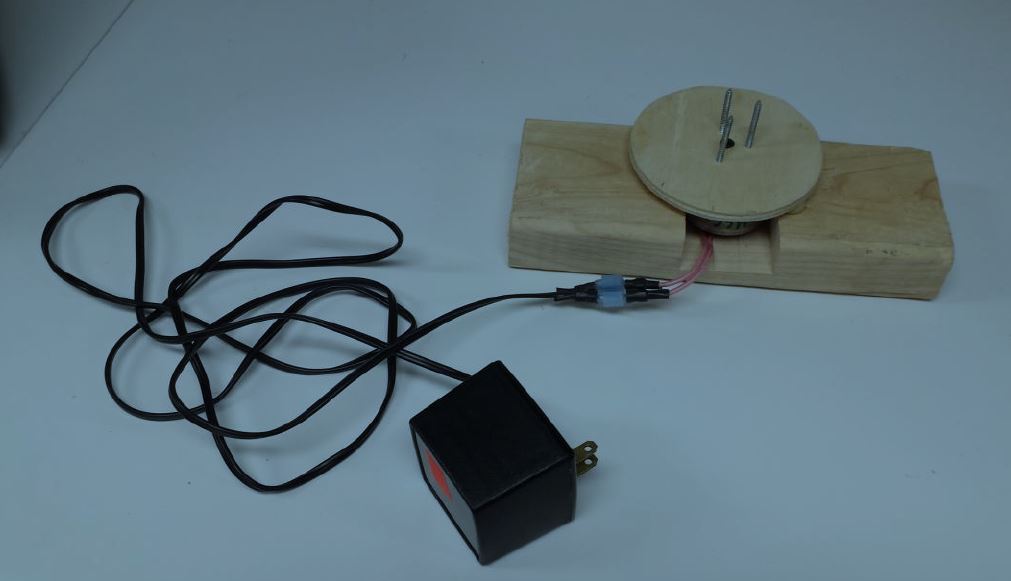
    1. Set up a 'spinner' to simulate a body orbiting a point of light.  This simulates an orbiting exoplanet around its star.The image shows a motorized spinner that will allow balls (exoplanets) to be attached for a experimt showing the albedo effec
        Use the instructions found at: 

    You will need the following materials for the more controlled experiment:

    • Computer or phone with camera
    • Access to the Light Curve application:  
    •   An Albedo Detector Spinner (instructions and equipment found below in written and video form): The Detector Spinner is an excellent tool, but students may be able to design some other tool to allow their models to revolve in and out of the light source.)
    • A light source - this may be a lamp, light bulb, the flashlight app on a device - it should be quite bright and intense
    • A darkened room, or a darkened area behind the revolving model.
    • A Model Albedo Target (exoplanet)  to provide and albedo comparison to an Experimental Target. (This may be a small item such as a grape or small ball. ) A larger target such as  a potato may confuse students on the comparison of a far-away sun with an orbiting planet in its solar system.
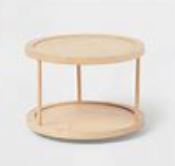
    • Tape/clay to hold the model in place as it moves. The spinner described has screws that can aid in holding the target secure as it 'orbits' or revolves around the spinner's gear. A simple kitchen 2- shelved Lazy Susan Image of a Lazy Susanwith the top shelf  removed usually has the supports that can be used to anchor your 'planet.'
    • Download  Easy mobile phoe light meter tool:                 Light Meter Pro  or Lux Light Meter Pro

     This will allow you to see a quickly generated live light curve in the experiment.  These cell phone live graphs are not able to be saved and printed. Engaging students to read the curve as it is created and live graph it will allow for more student invovlement. 
                   
    •    Other Light Curve program with ability to print and save the curves: 
                   -Allskeye Light Curve Tool
                    -apkpure
                   -Transit Method Interactive for Laptop - Leeds Universtiy_ Spark.iop
                            Leed Univ Video for Spark.ios
                  
    • Analyze your light curve.

    Denise Wright is allowing  SpacEdge Academy to use her tutorial video for use of the Light Curve  Denise uses the Light Curve resource for computers of Ipads mentioned above to model how scientists search for exoplanets. In her video, Denise uses a set-up for exoplanet modeling that does not require the use of the Spinner.  You may find this approach helpful.  Please view her video to understand how to use the Light Grapher

    https://drive.google.com/file/d/0Bz7GyyTsWudueExNV0RqRXJXTU0/view


  • 9. Determning the Size of an Exoplanet

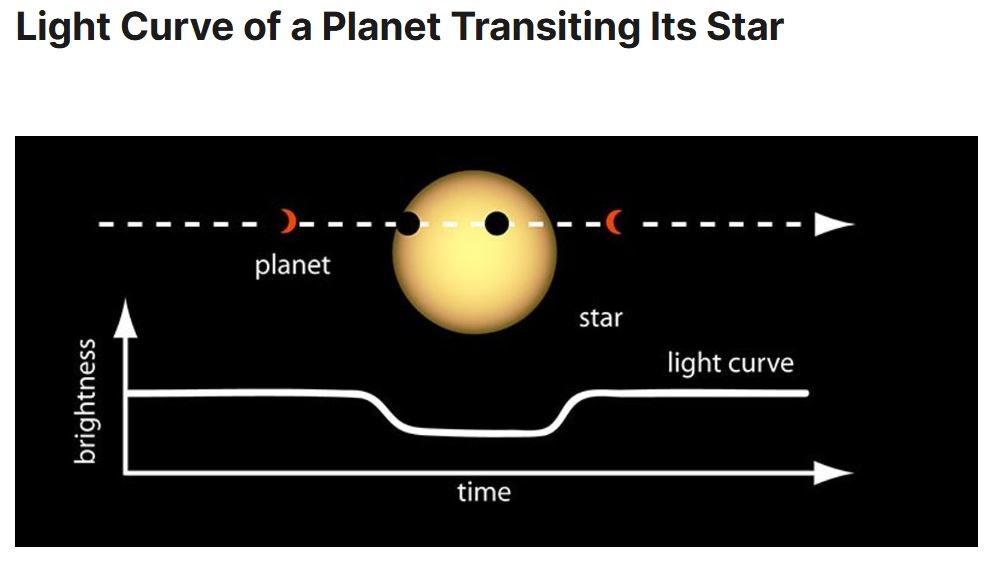
    Light curves from an exoplanet transitting an identified star can be used to determine how large the exoplanet is.

    The following ESA websitey Hack an Exoplanet - ESA has several videos to aid you in the exerciese of determining the radius of the planet from its light graph.A simple image of a planet transitting its host star with an accompanying light curve is shown.

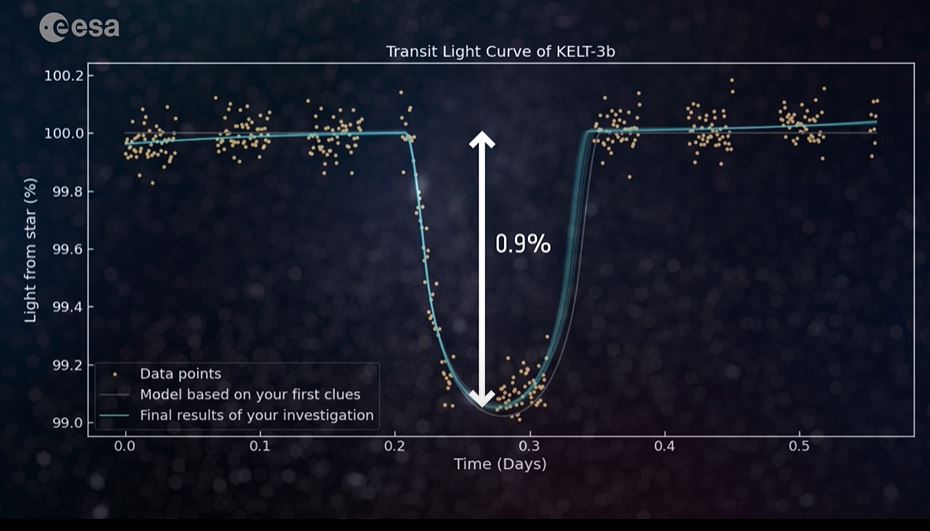
      Firstly, the transit depth is determined from the amount of the dip of the brightness intensity of the planet.

    Light curve from NASA.gov

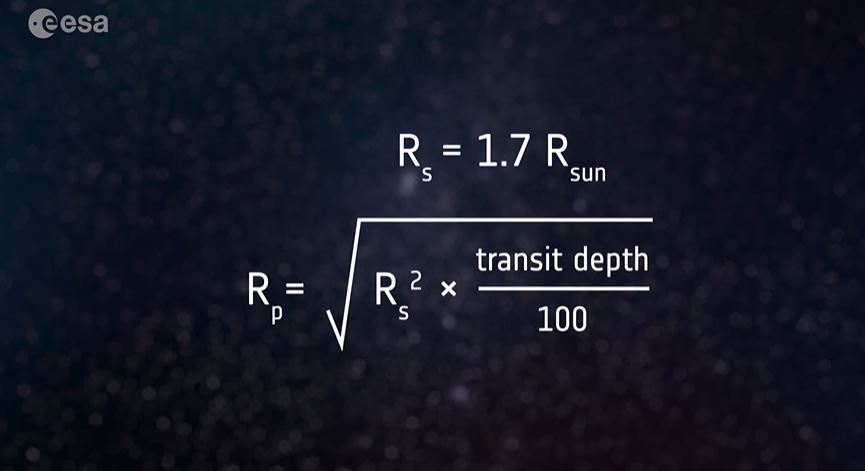
    The equation to determine a planet's intensity depth from a light curve from a transiting exoplanet.

    The Transit inensity or albedo is determined. Image shows a light curve for KELT 3b as it transits its host star KELT 3

    Knowing the radius of the host star (from reported data) is required in this derivation as well as using the radius of the sun. Equation for determining the radius an exoplanet based on its light intensity on light graph.

    The actual radius of the star can be determined.  This is a great exercise to then compare it to the theoretical planet radius from TESS or Kepler information.

    More great videos on exoplanet determination are found on the  Hack and Exoplanet site.

    Take a look at the following 3 min video:

    Determining Exoplanet Size with Light Curves

    More Advanced determination with raw data, no reported information on the host star:

    This website provides a more indepth look at determining exoplanet size, taking account observed change of flux, the impact parameter, the transit duration, and other  characteristics of the transit: 

    The Exoplanet Transit Method by Paul Anthony Wilson

  • 10. Atmospheres of Exoplanets

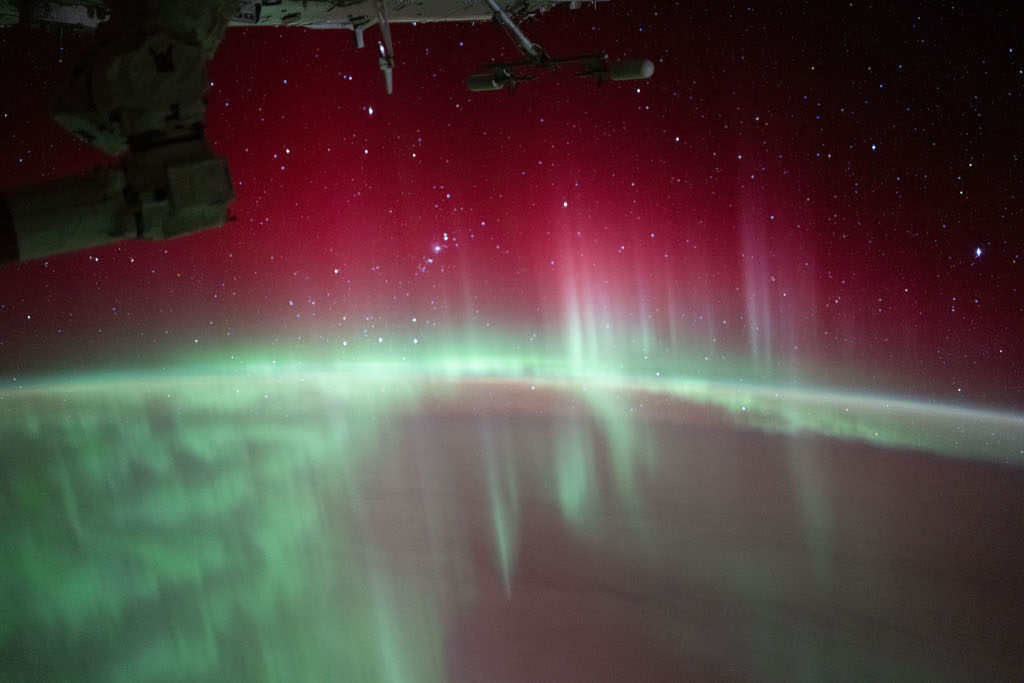
    Exoplanet atmospheres are fascinating because they can tell us a lot about theImage of the Earth's atmosphere with aurora taken from the International Space Station - NASA planet’s potential for habitability, its weather patterns, and even its formation history. Here are some key points about exoplanet atmospheres: 
    (Credit:  NASA from the ISS)

    1. Composition: Exoplanet atmospheres can vary widely. They may contain gases like hydrogen, helium, carbon dioxide, methane, and water vapor. The specific mix of these gases can influence everything from the planet's climate to its potential for supporting life. 

    1. Detection: We study exoplanet atmospheres by analyzing the light that passes through them during a transit (when the planet passes in front of its star) or by observing the planet's reflected light. Techniques like spectroscopy allow scientists to identify the different elements and molecules in the atmosphere. 

    1. Clouds and Hazes: Clouds and hazes can form in the atmospheres of exoplanets, affecting their albedo (reflectivity) and potentially masking other atmospheric features. For instance, hot Jupiters often have thick cloud layers composed of silicates or sulfides. 

    1. Weather and Climate: Just like on Earth, exoplanets can have dynamic atmospheres with wind patterns, storms, and varying temperatures. For example, some hot Jupiters experience extreme temperatures and supersonic winds. 

    1. Habitability: The presence of certain gases, like oxygen or methane in the right ratios, can be potential biosignatures indicating the presence of life. Additionally, atmospheres can protect the surface from harmful radiation and help maintain temperatures conducive to liquid water. 

    The atmosphere of an exoplanet can significantly influence its albedo. For instance, clouds and hazes in the atmosphere can reflect a lot of incoming starlight, increasing the planet's albedo. On the other hand, a clear atmosphere with few clouds might result in a lower albedo. 

    Understanding the albedo of exoplanets helps astronomers learn more about their atmospheric composition, climate, and potential habitability. 

     While atmospheres often make up only a tiny fraction of a planet’s mass, they have an out-sized importance in determining a number of physical properties of planets, how they evolve with time, and their physical appearance. Connections are made to the well-studied atmospheres of brown dwarfs as well as sub-Neptunes and terrestrial planets, where appropriate. Illustrative ex amples of model atmosphere retrievals on a thermal emission spectrum are given and connections are made between atmospheric abundances and the predictions of planet formation models.


    This review article summarizes the current state of exoplanet atmospheric studies for transiting planets. We focus on how observational results inform our understanding of exoplanet properties and ultimately address broad questions about planetary formation, evolution, and diversity. This review is meant to provide an overview of the exoplanet atmospheres ield for planetary- and geo-scientists without astronomy backgrounds, and exoplanet specialists, alike.


    • A general quiz about exoplanet atmospheres.

    • This review article summarizes the current state of exoplanet atmospheric studies for transiting planets. We focus on how observational results inform our understanding of exoplanet properties and ultimately address broad questions about planetary formation, evolution, and diversity. This review is meant to provide an overview of the exoplanet atmospheres ield for planetary- and geo-scientists without astronomy backgrounds, and exoplanet specialists, alike.

    • While atmospheres often make up only a tiny fraction of a planet’s mass, they have an out-sized importance in determining a number of physical properties of planets, how they evolve with time, and their physical appearance. Connections are made to the well-studied atmospheres of brown dwarfs as well as sub-Neptunes and terrestrial planets, where appropriate. Illustrative ex amples of model atmosphere retrievals on a thermal emission spectrum are given and connections are made between atmospheric abundances and the predictions of planet formation models.

  • 10. Citizen Science with Exoplanets

    Citizen Scientits have long been involed with celestial research for exoplanet.

    Exoplanet information from satellites brings a wealth of data.  The citizen scientists grat facilitates the work of the space agencies in deciphering the data and make interesting discoveries.

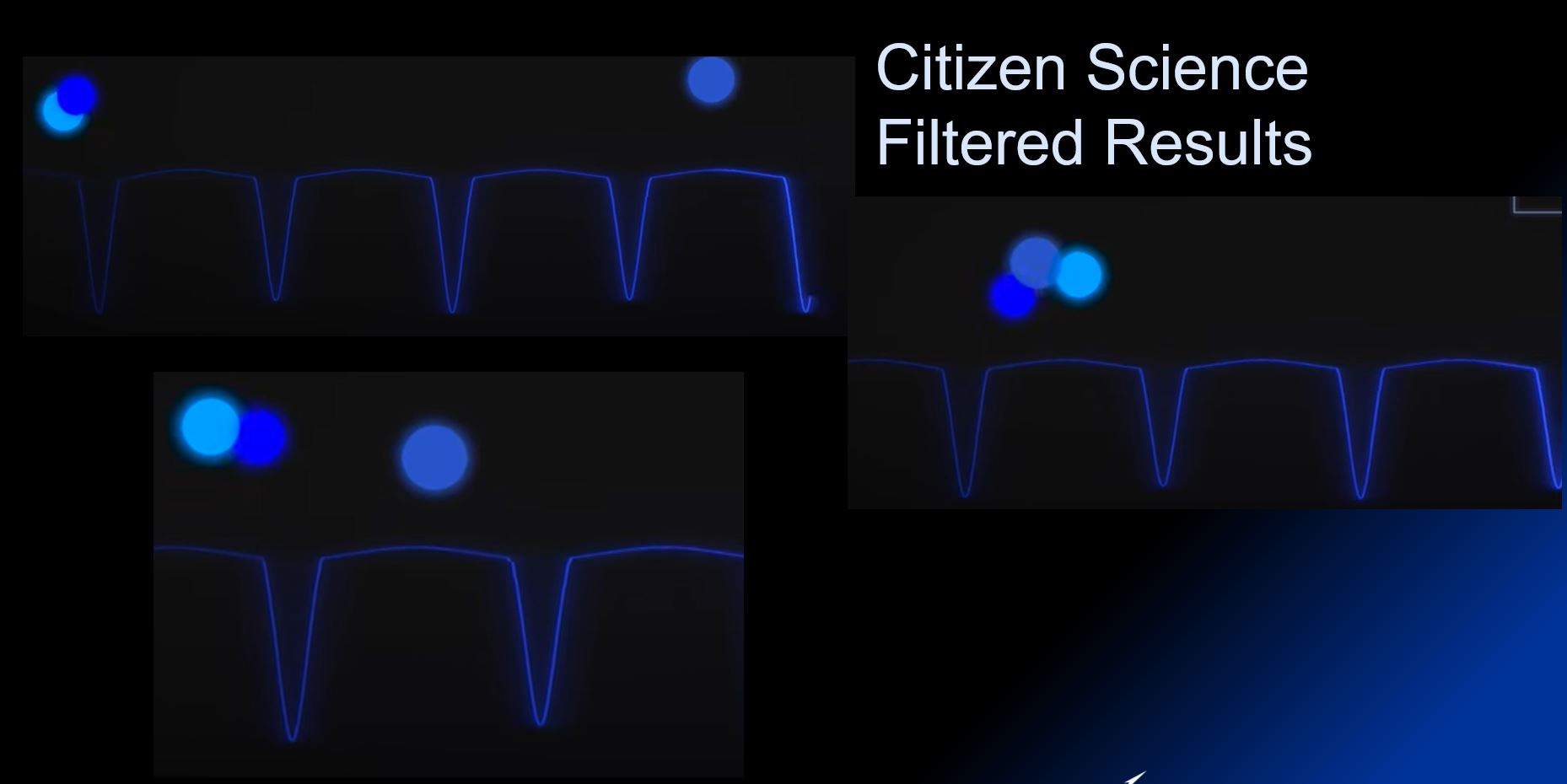
    With such example information that came apparent with the help of the citizen scientists take data on a triplet of stars orbiting each other  and  filtering the information helpting to clarify it.  Here are some images of the light curves filtered of the triplet star system. The graphs shown here were part of a longer sequece that lasted 75 minutes.  These stars may lead to a a supernovae in 20 to 40 million years!

    How NASA Citizen Scientists Fuels Futue Exoplanet Research

    This image shows a composite of the light curve generated when a trio of stars are orbiting each other in 75 min.

    The image above notes several sequences of a three star system and the albedo noted as they transit their host star,  The exposures took 33 days to capture the two stars  orbiting one another and then a third joining the orbiting dance.

    Professional and amateur astronomers teamed up with artificial intelligence to find an unmatched stellar trio called TIC 290061484, thanks to cosmic “strobe lights” captured by NASA’s TESS (Transiting Exoplanet Survey Satellite)

    NASA's TESS Spots Record Breaking Stellar Triplets

    Citizen Science resources to engage in looking for and analyzing exoplanet data are found at:

    This site gives information on using TESS date to look for planets:

    Planet Hunters

    • Professional and amateur astronomers teamed up with artificial intelligence to find an unmatched stellar trio called TIC 290061484, thanks to cosmic “strobe lights” captured by NASA’s TESS (Transiting Exoplanet Survey Satellite)

    Planet Watch tutors you in how to find exoplanets.

    • These are 10 multiple choice questions over citizen science with exoplanets.

  • Resources


    Section 1:  Introduction to Exoplanets

       Information on Trappist 1 System


    • Various Resources for Exoplanet Study in the Classroom:

    Science Buddies - Exoplanets

    Section 2: Significance of Exoplanet Study:

    Why Do Scientists Search for Exoplanets? Here Are 7 Reasons

    Section 3: Ground Telescopes:

    NASA's S and the ground-based TRAPPIST (TRAnsiting Planets and PlanetesImals Small Telescope)

    • Space Telecopes: 

    Keplar Space Telescope - Launched 2004 - deactivated in 2018

                 Discovered the first exoplanets.

                 Info on Kepler

    Spitzer Space Telescope - Launched 2009 - deactivated in 2020

                 Info on Spitzer

    • JWST:
    Observing Exoplanets with the James WebbSpace TelescopeCharles A. Beichman & Thomas P. Greene

    NASA’s Webb Takes Its First-Ever Direct Image of Distant World

    Eyes on Exoplanets :HIP 65426 info re: JWST

    TESS:   Transiting Exoplanet Survey Satellite 

    Info found on this page:

    TESS


    Section 6: How Exoplanets are Detected - Different methods

    5 Methods are defined:

    5 Methods for Detecting Exoplanets

    Inverse.com, a magazine that gives smart, in-depth coverage of the latest discoveries and research in science, from evolution to space exploration has the following article on the 5 detection methods. Great graphics are seen in this article:

     Methods for exoplanet detection

    Direct imaging of Exoplanets:

    This article gives an idea of how Direct Imaging is currently done and what could be in store for information on the characteristics of planets - atmospheres, cloud cover, etc., by investigating exoplanets with Direct Imaging.

    NASA Article on Direct Exoplanet Imaging

    Section 7: Albedo Detection


    • This NASA site shows several systems of exoplanets around their host stars:

    Information on Trappist 1 System

    Exoplanets - What can We Really See?

    • Information from a light curve showing a change in albedo from  asimulated orbiting exoplanet:

    Astronomy Stack Exchange


    Section 8: Instructions for Determining Albedo for an Exoplanet Simulation

    • Other Light Curve program with ability to save curves: 
                   -Allskeye Light Curve Tool
     
                  -apkpure
                   -Transit Method Interactive for Laptop - Leeds Universtiy_ Spark.iop
                            Leed Univ Video for Spark.ios

    Section  9: Determing the Size of an Exoplanet

    Section 10:  Atmosphere of Exoplanets

    • While atmospheres often make up only a tiny fraction of a planet’s mass, they have an out-sized importance in determining a number of physical properties of planets, how they evolve with time, and their physical appearance:

    Modeling Exoplanet Atmospheres

    Transitting Exoplanet Atmospheres in the Era of JWST

    This review article summarizes the current state of exoplanet atmospheric studies for transiting planets. https://typeset.io/pdf/transiting-exoplanet-atmospheres-in-the-era-of-jwst-k6ccfrzoc4.pdf


    Section 11:  Citizen Science Opportunities

    • This resource discuses the detection of a triple  orbiting star system:

    How NASA Citizen Scientists Fuels Futue Exoplanet Research

    This site gives information on using TESS date to look for planets:

    Planet Hunters

    • Professional and amateur astronomers teamed up with artificial intelligence to find an unmatched stellar trio called TIC 290061484, thanks to cosmic “strobe lights” captured by NASA’s TESS (Transiting Exoplanet Survey Satellite)

    NASA's TESS Spots Record Breaking Stellar Triplets

    Planet Watch                                                                                                              This site explains how to find exoplanets.